
Ficus hedges are popular throughout Auckland because they grow quickly, provide good privacy and can form a dense, attractive boundary. However, ficus is sensitive to cold conditions, particularly in exposed areas where winter frost can settle on the foliage.
After a heavy frost, a previously green ficus hedge can suddenly turn brown, patchy or scorched. It may look dead, but that does not necessarily mean the entire hedge needs to be removed or heavily cut back.
Knowing when to wait and when to prune can make a significant difference to how well your hedge recovers. If you are unsure what condition it is in, a professional assessment can help you avoid removing healthy growth unnecessarily.
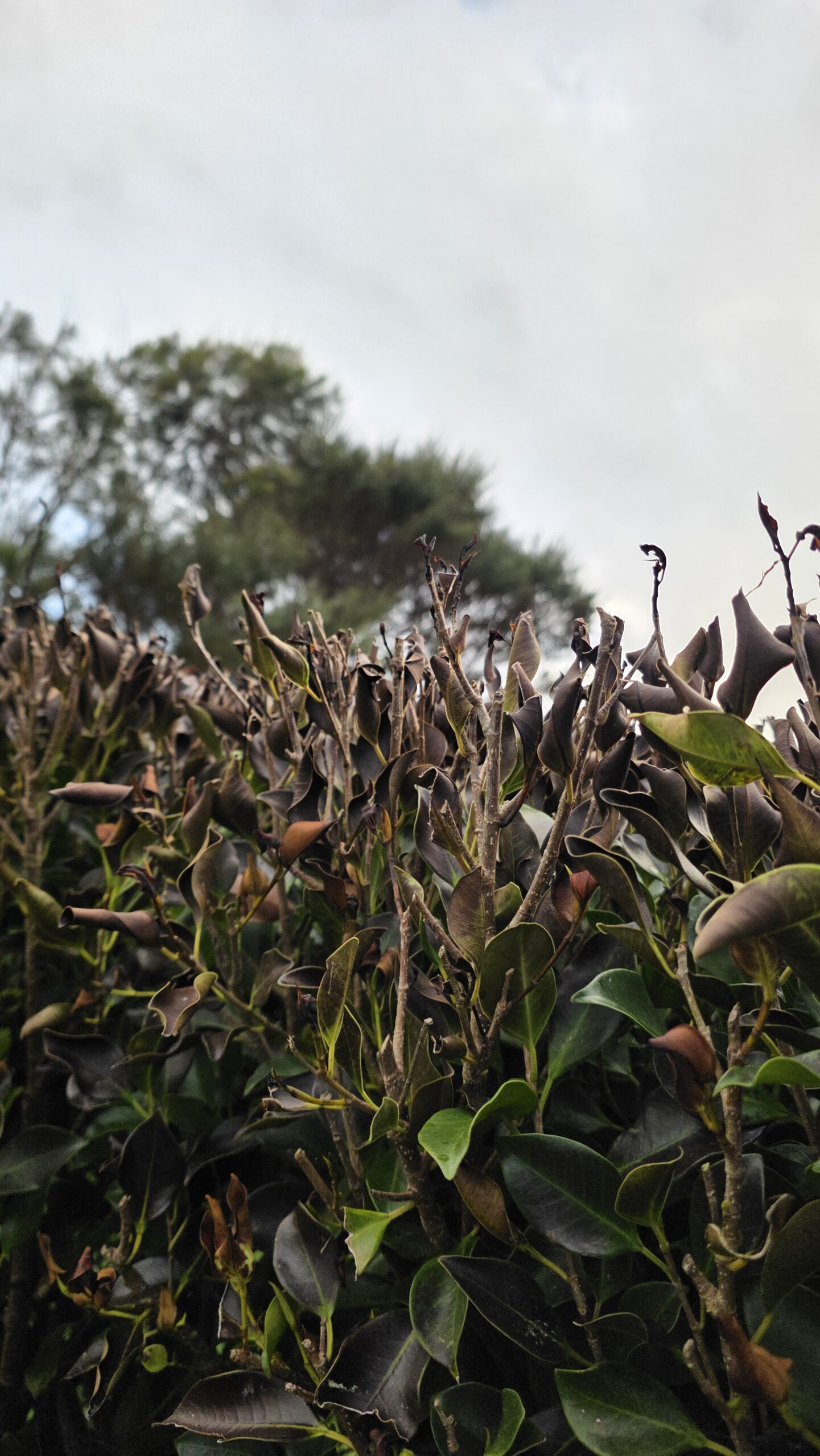
What Does Frost Damage Look Like on a Ficus Hedge?
Ficus hedge frost damage usually becomes noticeable shortly after a cold night or a series of frosts. Damage can vary across the hedge depending on its location, shelter and exposure.
Common signs include:
- 🟩 Brown, bronze or blackened leaves
- 🟩 Leaves that appear dry, curled or scorched
- 🟩 Sudden leaf drop
- 🟩 Damage concentrated on the top or outer face of the hedge
- 🟩 More severe damage on exposed corners and higher sections
- 🟩 Green foliage remaining closer to the centre or lower parts of the hedge
The outside of the hedge is normally the most exposed to cold air. The inner branches may remain healthy even when much of the visible foliage has turned brown.
Does Brown Foliage Mean the Hedge Is Dead?
No. Brown leaves are a sign that the foliage has been damaged, but they do not automatically mean that the branches or root system are dead.
A frost damaged ficus hedge may still have living wood beneath the damaged foliage. Once temperatures begin to rise, healthy branches can produce new buds and leaves.
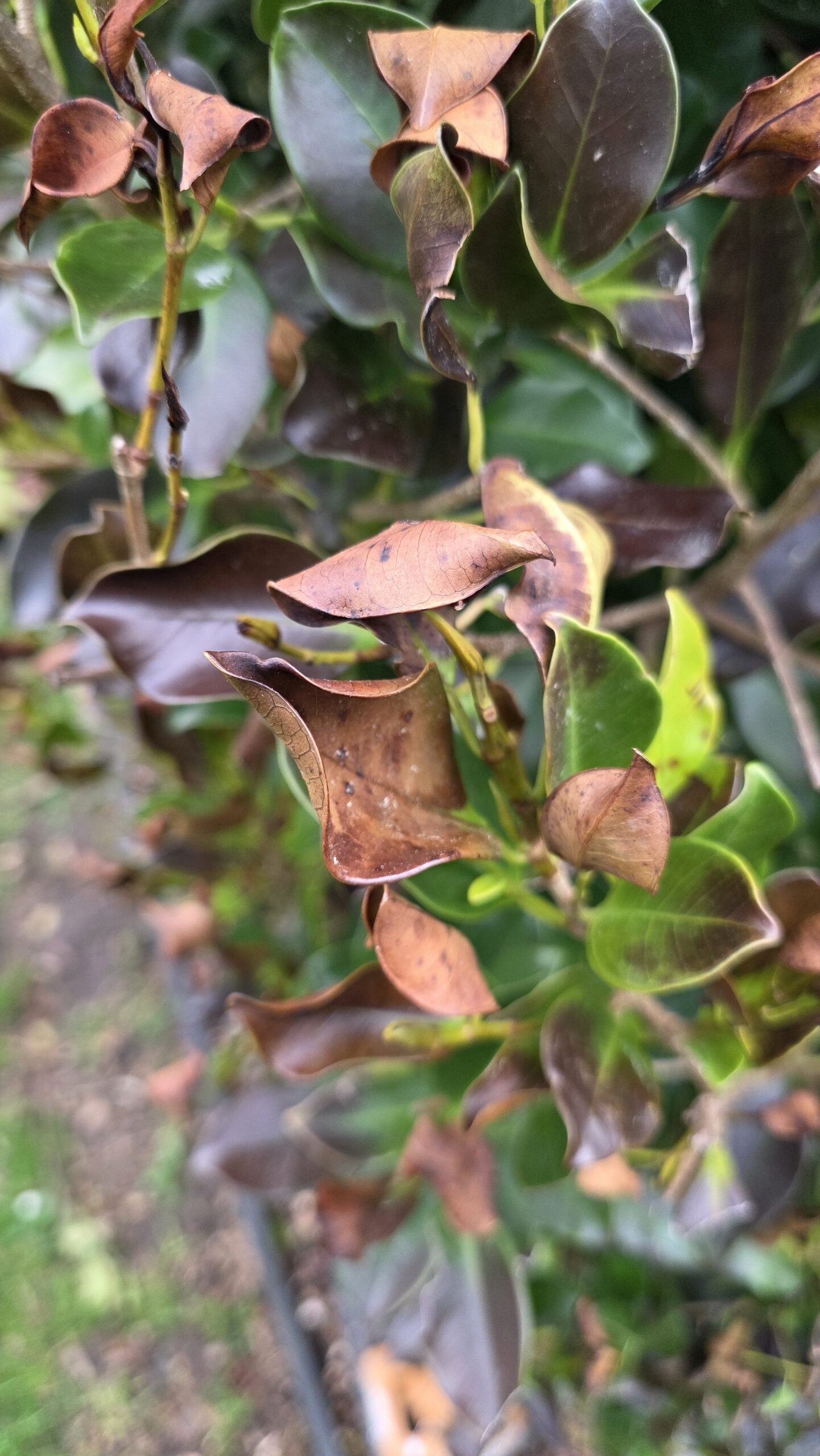
The extent of recovery will depend on how severe the frost was, whether the hedge is young or established, how exposed the property is, its health before winter and whether further frosts occur. Some hedges recover quickly, while others may have individual branches or sections that have died and will eventually need to be removed.
Avoid Heavy Ficus Hedge Trimming Too Early
It can be tempting to trim away all the brown foliage as soon as the damage appears. However, heavily pruning a frost-damaged hedge too early can cause further problems.
The damaged outer foliage may still provide some protection for the living branches underneath. Removing it during winter can expose new areas of the hedge to cold conditions and further frost.
Early trimming can also make it difficult to tell which branches are genuinely dead. A branch that appears damaged in winter may produce healthy new growth once the weather warms.
For these reasons, major ficus hedge trimming is usually best delayed until the risk of further frost has reduced and the hedge has had an opportunity to show signs of recovery. Light removal of obviously broken or hazardous branches may still be appropriate, but substantial pruning should be approached carefully.
Let Spring Growth Show What Is Still Alive
New spring growth is one of the clearest indicators of which parts of a ficus hedge have survived. As temperatures improve, healthy branches should begin producing new buds or shoots. This makes it easier to separate living growth from branches that have died.
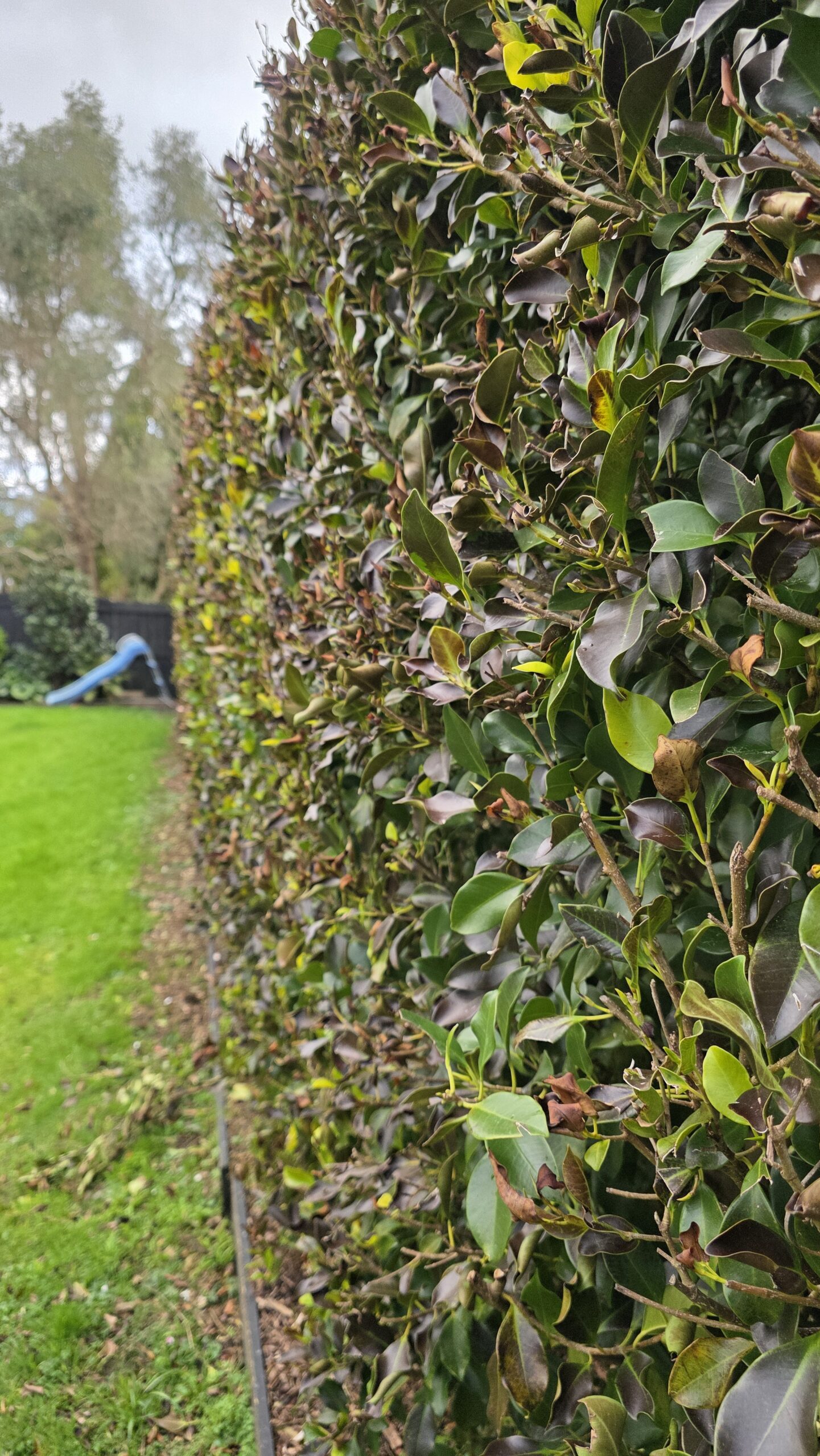
Waiting for this response allows the hedge to guide the pruning process. Instead of cutting the entire hedge back based only on the appearance of its leaves, pruning can focus on material that has failed to recover.
New growth may appear unevenly. Sheltered sections might recover before exposed areas, so it can be worth allowing the hedge enough time to respond before making a final decision.
When Should a Frost-Damaged Ficus Hedge Be Trimmed?
The right timing depends on the weather, the condition of the hedge and how severely it has been damaged.
In many Auckland locations, it is better to wait until the colder part of winter has passed and the likelihood of further frost has reduced. Ideally, the hedge should also be showing signs of active new growth.
At this stage, professional hedge trimming can:
- 🟩 Remove dead leaves and branches
- 🟩 Identify the boundary between dead and living wood
- 🟩 Prune damaged branches back to healthy growth
- 🟩 Restore a more even hedge shape
- 🟩 Improve light and growing space for recovering sections
- 🟩 Reduce the risk of excessive or unnecessary cutting
The timing may be different for a sheltered central Auckland property compared with a colder or more exposed location in west, northwest or south Auckland. Local conditions should always be considered.
How Heavily Should the Hedge Be Pruned?
A lightly affected hedge may only need a tidy-up once it begins growing again. More heavily damaged hedges may need dead material removed and branches pruned back to healthy wood.
The goal is to retain as much viable structure as possible while creating suitable conditions for recovery. Cutting every affected section back to the same depth can remove healthy branches and leave large gaps.
A staged approach may be more appropriate, particularly where the hedge provides important privacy or screening. Some severely damaged sections may take time to fill out again. Good hedge maintenance in Auckland should consider the hedge’s long-term recovery, not just how it looks immediately after trimming.
Why Have the Hedge Professionally Assessed?
It is not always easy to tell the difference between dead wood and dormant or slow-recovering growth. This is particularly difficult on large, tall or heavily damaged ficus hedges.
A professional assessment can establish whether the hedge is likely to recover, which branches are still alive, how far damaged sections should be pruned and whether the work should happen now or be delayed.
Professional hedge trimming also produces a cleaner, more consistent result than aggressively cutting the hedge back without first checking its condition. For large hedges, appropriate access equipment and safe work methods may be required, especially near buildings, roads, fences, powerlines or neighbouring properties.
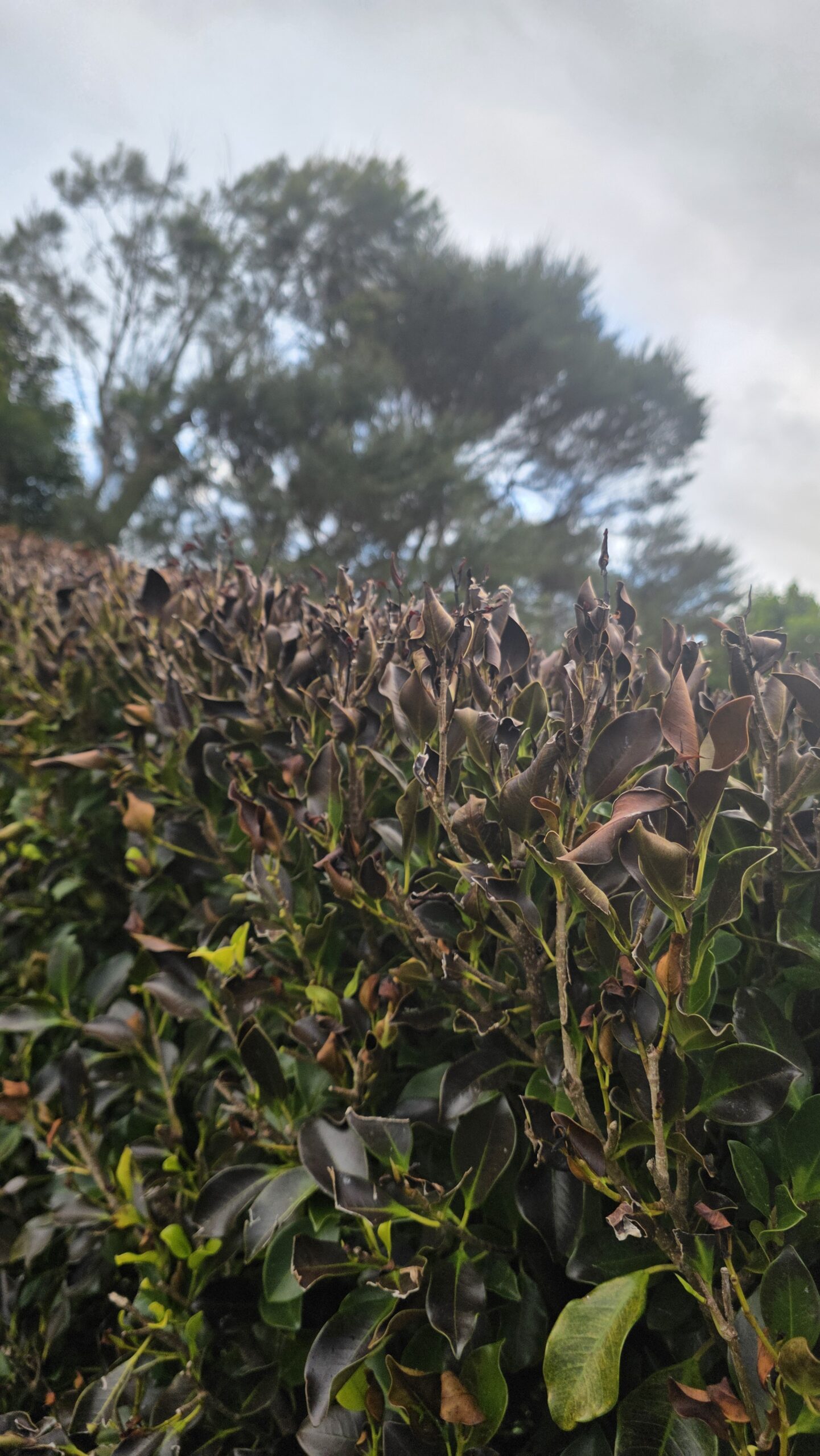
Professional Hedge Trimming Across Auckland
Hardfell provides professional hedge trimming and hedge pruning throughout Auckland.
Our experienced arborists can assess a frost damaged ficus hedge, identify healthy growth and recommend a practical pruning plan. Where possible, we focus on retaining viable material and helping the hedge recover without removing more than necessary.
We provide ficus hedge trimming, regular hedge maintenance Auckland homeowners can rely on, and one-off reductions for residential, commercial and lifestyle properties.
Need Advice About a Frost-Damaged Hedge?
If your ficus hedge has turned brown after a frost, avoid assuming it is completely dead. Contact Hardfell for professional hedge trimming Auckland homeowners can trust, or practical advice on the best time to prune it.