
Tree Bracing and Propping Auckland
Explore support options for vulnerable limbs and valued mature trees. Hardfell assesses the tree, structural concern and surrounding site before recommending bracing, propping or another approach.
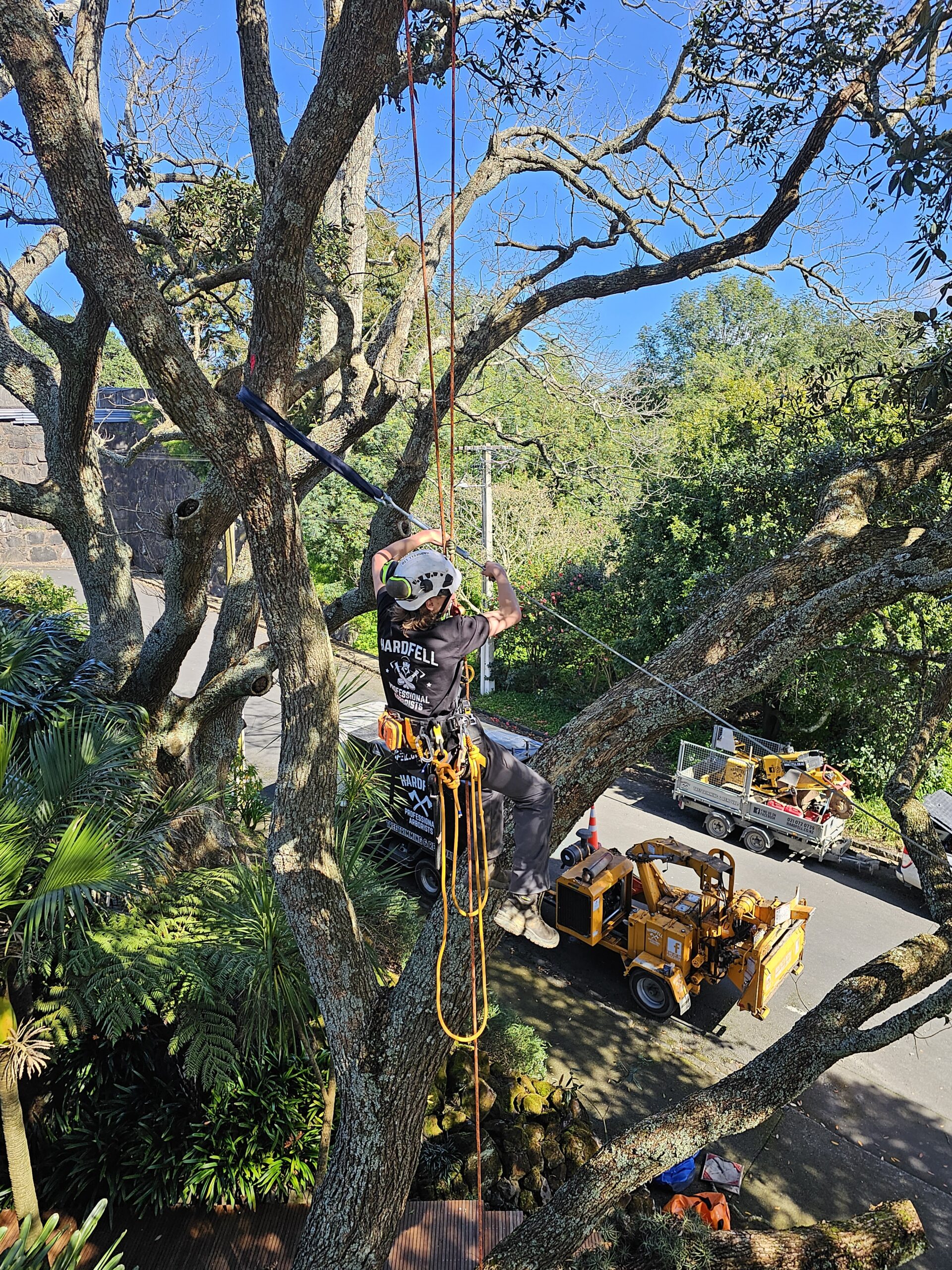
Tree support starts with an assessment
Bracing and propping can help manage a specific concern while retaining a tree. Suitability depends on the tree’s condition, the defect, likely loads and what is beneath the canopy. A support system has limits and needs a plan for future inspections.
Canopy bracing
Assess support systems for selected weak unions or heavy limbs.
Branch propping
Explore site-specific props for low, spreading branches where suitable.
Structural concerns
Discuss cracks, movement, past failures and the surrounding targets.
Pruning with support
Consider selected load reduction alongside a support system.
Mature tree retention
Compare practical options for keeping a valued tree and its benefits.
Follow-up inspections
Agree monitoring and maintenance requirements for the installed system.
When could bracing or propping be suitable?
A heavy branch, weak union or valued spreading limb may prompt an assessment. Photos are useful for an initial discussion, but the recommendation depends on the tree and site.
We discuss the intended purpose and limits of the proposed support. Pruning, bracing, propping or removal may be considered depending on the concern.
No support system makes a tree completely safe. Changes in the tree or system can affect its performance, so follow-up checks form part of the plan.
Before we start
- Tree condition and identified structural concern
- People, buildings and access beneath the canopy
- Support position and installation requirements
- Inspection and maintenance arrangements
Send the address, photos and job details so we can assess the scope.
Temporary tree tie-backs for site access
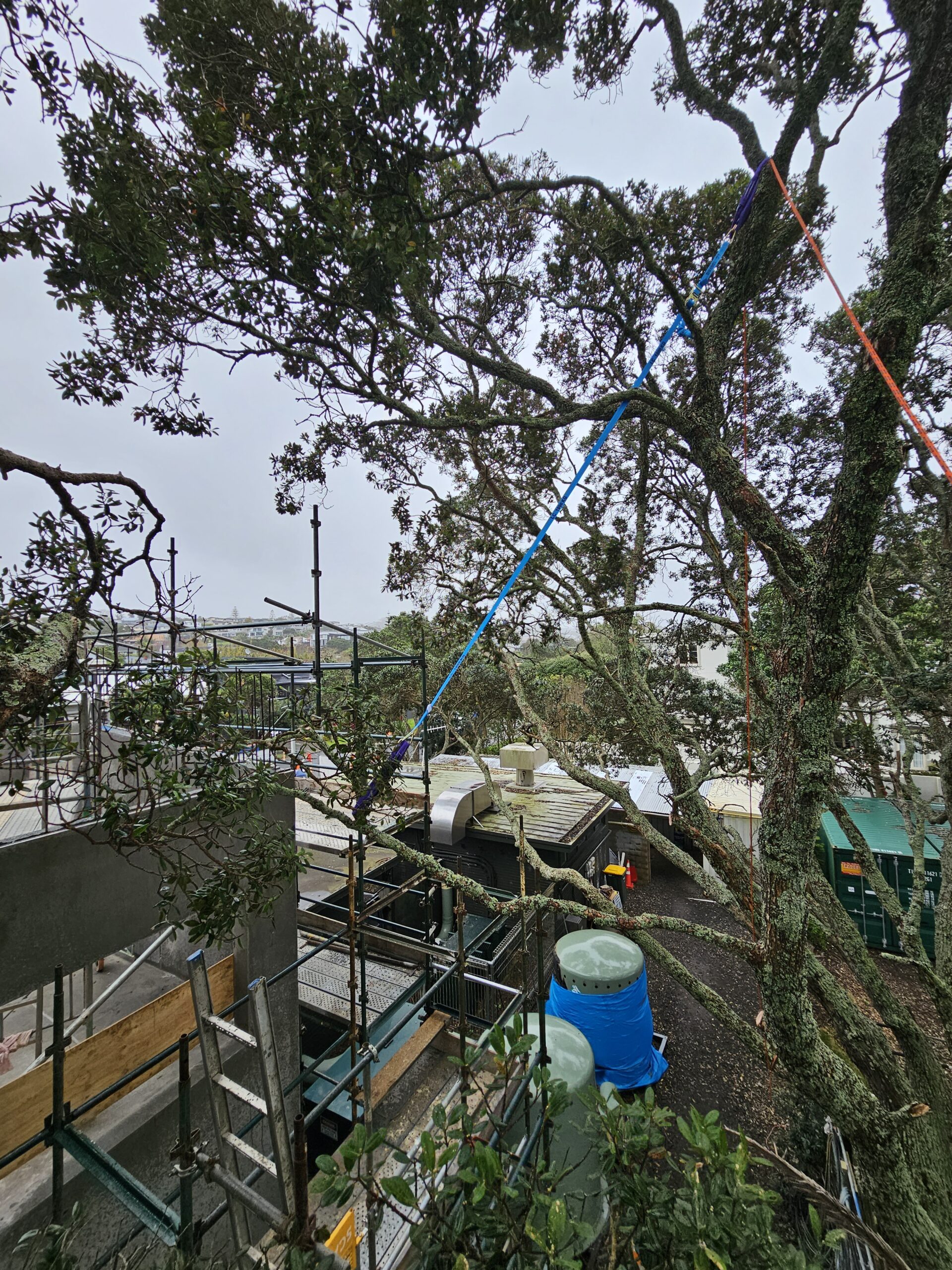
Need to get machinery past a tree without cutting branches out of the way? Hardfell provides temporary tree tie-backs and bracing for suitable stems on construction and civil sites across Auckland.
We can temporarily secure selected branches or stems clear of an access route or work area. This can create room for excavators, trucks, building deliveries and classroom placement where pruning is unsuitable or needs to be kept to a minimum.
The aim is to reduce the risk of contact and machinery damage while retaining suitable branches. We assess the tree’s condition, stem flexibility, anchor points and required clearance, then coordinate the setup, checks and removal with the site team and consultant arborist where required.
Temporary tie-backs form part of a site-specific tree protection plan, alongside agreed machinery routes, exclusion zones and root protection.
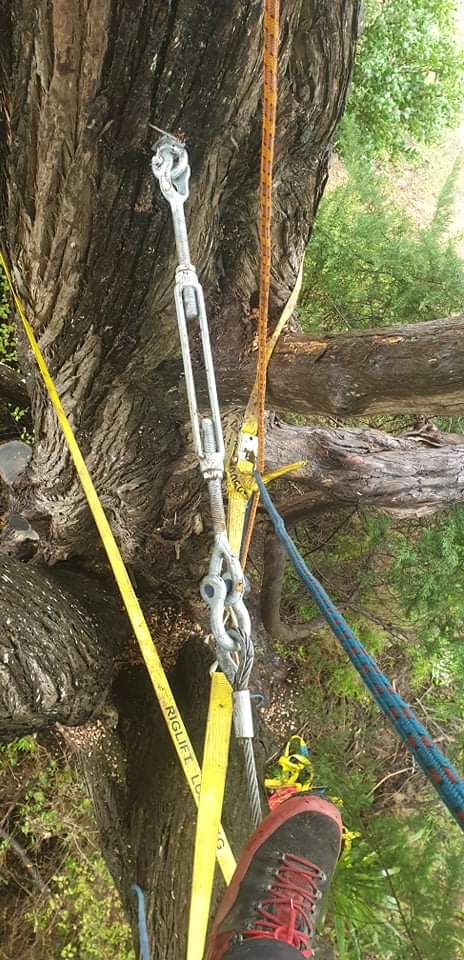
Permanent tree bracing and bolting
Longer-term support may be an option for selected weak unions, heavy limbs or structural concerns in a valued tree. Depending on the assessment, options can include cable bracing, bolt bracing or branch propping.
We select the approach for the tree and its surroundings, explain what the system is intended to achieve and discuss any pruning needed alongside it. Installed supports need ongoing inspections as the tree grows and conditions change.
Send us photos of the tree and the area beneath it so we can discuss the next step.
What to expect
Describe the concern
Send photos and tell us about cracks, movement or past branch failures.
Assess the options
Our arborist checks whether support, pruning or another method is suitable.
Install and review
Complete the agreed work and explain future inspection needs.
Frequently asked questions
Can you temporarily tie branches back for construction access?
Yes, where the tree and stems are suitable. Temporary tree tie-backs can create clearance for machinery, trucks or building placement while minimising pruning. We assess the required movement, tree condition and anchoring arrangements, then coordinate installation, monitoring and removal with the project team.
Will bracing make a tree completely safe?
No. A support system manages a specific concern and does not remove every risk. We explain its purpose, limitations and inspection requirements.
Can you prop a large low branch?
Potentially. The branch, ground conditions and proposed prop position need assessment first.
Will a supported tree need inspections?
Yes. Trees and support systems change over time. Inspection requirements are discussed for the installed system.
Is bracing always better than tree removal?
No. The recommendation depends on the tree, defect and site. We discuss retention options where suitable and explain alternatives.
Related services and useful reading
Tell us about your tree work
Send the property address, photos and what you need done. We’ll assess the scope and discuss the next step.