
A large tree came down across the playground at Western Park in Ponsonby during heavy rain over the weekend. Public reporting confirms the location and timing, but it does not confirm the tree species or the exact cause of the failure. We will not speculate about either.
What the incident does provide is a timely reminder for Auckland property owners: trees after heavy rain deserve a careful visual check. Look around homes, driveways, play areas and accessways for any visible changes.
Quick answer: From a safe distance, look for a new lean, lifted or cracked soil, exposed roots, fresh splits, hanging branches, broken limbs caught in the canopy and erosion around the root zone. If anything has moved or failed, keep people and vehicles clear and arrange an arborist assessment.
Why Heavy Rain Can Change Tree Stability
Heavy rain does not automatically make a tree dangerous, and it is rarely useful to blame one factor without inspecting the tree and site. Tree failure can involve root condition, decay, structural defects, exposure, soil type, drainage, previous damage and wind loading.
However, saturated ground can be one contributing factor. The International Society of Arboriculture notes that strong winds can uproot trees, particularly when heavy rain has softened the soil. University forestry guidance also identifies saturated soils, confined roots and compacted ground as site conditions that can contribute to instability.
The practical takeaway is simple: do not assume every wet tree is unsafe, but do pay attention to visible changes after prolonged rain or strong wind.
Seven Warning Signs to Check After Heavy Rain
1. Lifted, cracked or heaving soil around the base
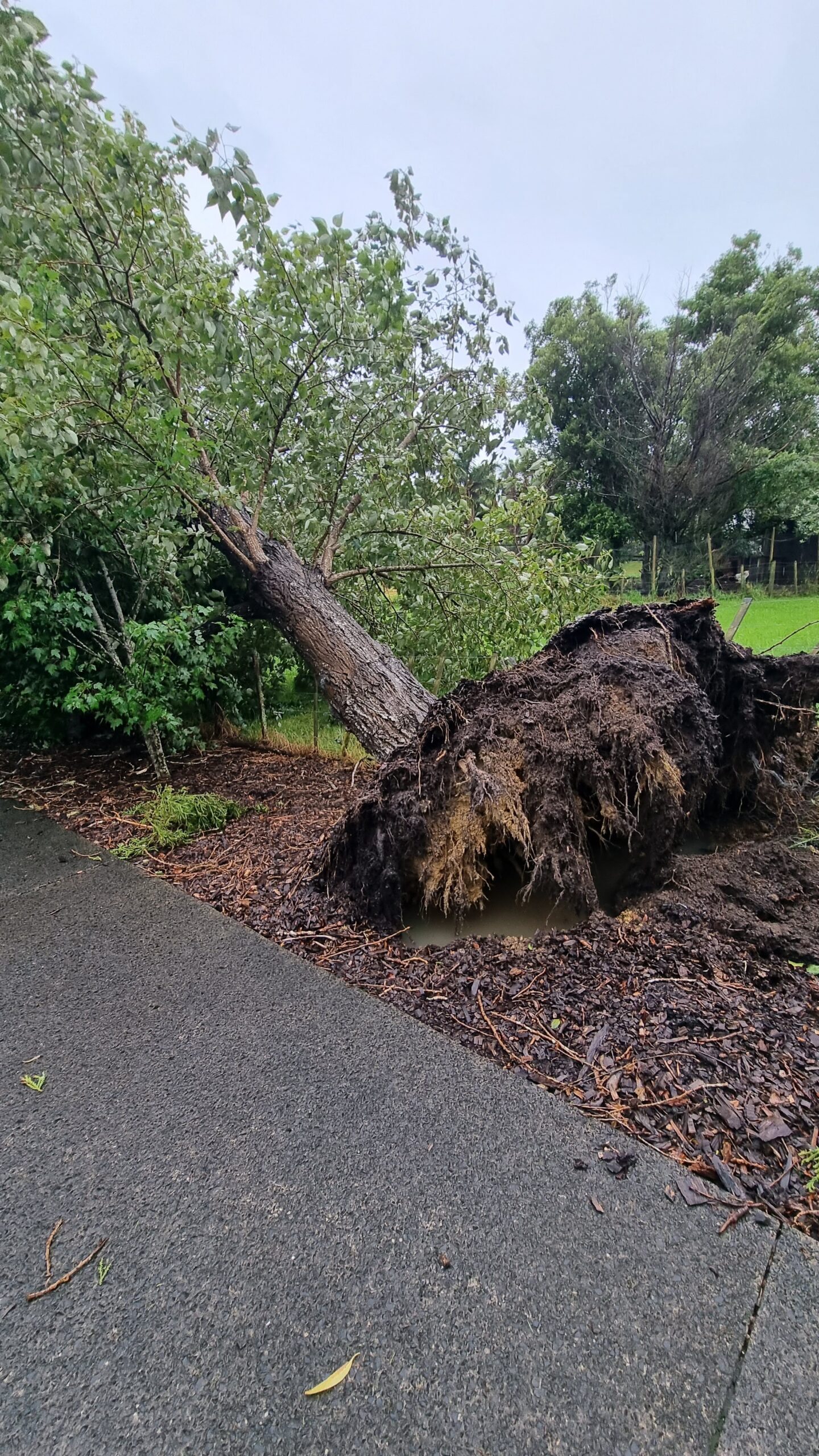
Stand well back and look around the base of the tree. Fresh cracks, raised soil, new depressions or movement in the root plate can indicate that roots and surrounding ground have shifted. When wind moves through the canopy, watch only from a safe position outside the likely fall zone. A root plate that rocks, pumps or lifts as the canopy moves is a serious warning sign.
Also look for fresh voids or cavities where soil has pulled away from the roots, recently exposed roots, broken roots, soft ground or an area that feels unusually hollow underfoot along an otherwise safe access route. Do not stomp around the base, walk onto lifted ground or stand on the side toward which the tree appears to be moving.
2. A new or noticeably increased lean
Many healthy trees naturally grow on an angle. The concern is a lean that is new, has increased, or is accompanied by soil movement, exposed roots or cracking around the base.
Older photos of the property can help establish whether the angle has changed. If you are concerned, take dated photographs from the same fixed point, such as a fence post or corner of the house, so the trunk angle can be compared over time. A new or increasing lean toward a house, driveway, road or frequently used area should be assessed promptly.
3. Fresh cracks or splits in the trunk and major unions
Check the trunk and the points where large stems join. Look for new cracks, torn bark, exposed wood or a union that appears wider than before. Recently exposed cambium, the living layer immediately beneath the bark, will often look lighter, brighter or fresher than the surrounding weathered bark and wood.
Do not stand directly beneath the canopy while checking. Binoculars or a phone camera with zoom can help you look from a safer position.
4. Hanging branches or broken limbs caught overhead
Check the upper canopy from a safe position. Wet foliage can temporarily add weight, while wind and existing structural weaknesses can cause limbs to fail. A branch does not need to reach the ground to be dangerous. Broken limbs can remain suspended in neighbouring branches and move later as wind returns or supporting foliage dries out.
If a branch is hanging above a driveway, entrance, deck, play area or footpath, keep the area clear until it can be inspected.
5. Exposed, damaged or undermined roots
Runoff can wash soil away from roots, especially on banks, beside streams, around retaining work or where drainage has recently changed. Construction, trenching and vehicle movement can also damage or compact the root zone.
Visible roots are not automatically defective. The concern is a recent change, breakage, loss of supporting soil or movement associated with the trunk.
6. Branches resting on roofs, fences, cables or other trees
Storm-damaged material may be partially supported by another structure. It can still be carrying considerable weight and may shift unexpectedly if cut, pulled or climbed on.
WorkSafe New Zealand warns that storm-damaged trees can be under hidden tension and may move without warning. This is not ordinary firewood work.
7. Any contact with power lines
Treat every low or fallen power line as live. Do not touch the tree, branch, fence or vehicle that may be in contact with it. Vector advises staying at least 10 metres away and calling 111.
Do Not Cut a Fallen Tree Yourself
Fallen stems and storm-damaged branches can be loaded in tension and compression. A cut can cause timber to spring, roll, split or drop in a direction that is not obvious from the ground.
- Do not climb the tree or use a ladder beneath damaged branches.
- Do not cut timber that is supporting another stem or structure.
- Do not pull large branches with a vehicle or unsuitable machinery.
- Do not work near electrical conductors.
- Do not allow children, pets or bystanders into the affected area.
NZ Arb advises that storm-damaged limbs and entire trees can be extremely heavy and dangerous to trim or remove. A trained arborist has the equipment and experience to assess the loading and establish an appropriate work method.
Controlled Lifting Around Vehicles
On another emergency callout, a large eucalyptus fell from a grassed area into a commercial car park and crushed two vehicles. Hardfell responded at short notice and used a Hiab to lift the material clear. This avoided dragging heavy timber across the vehicles and helped minimise the risk of further damage during the removal.
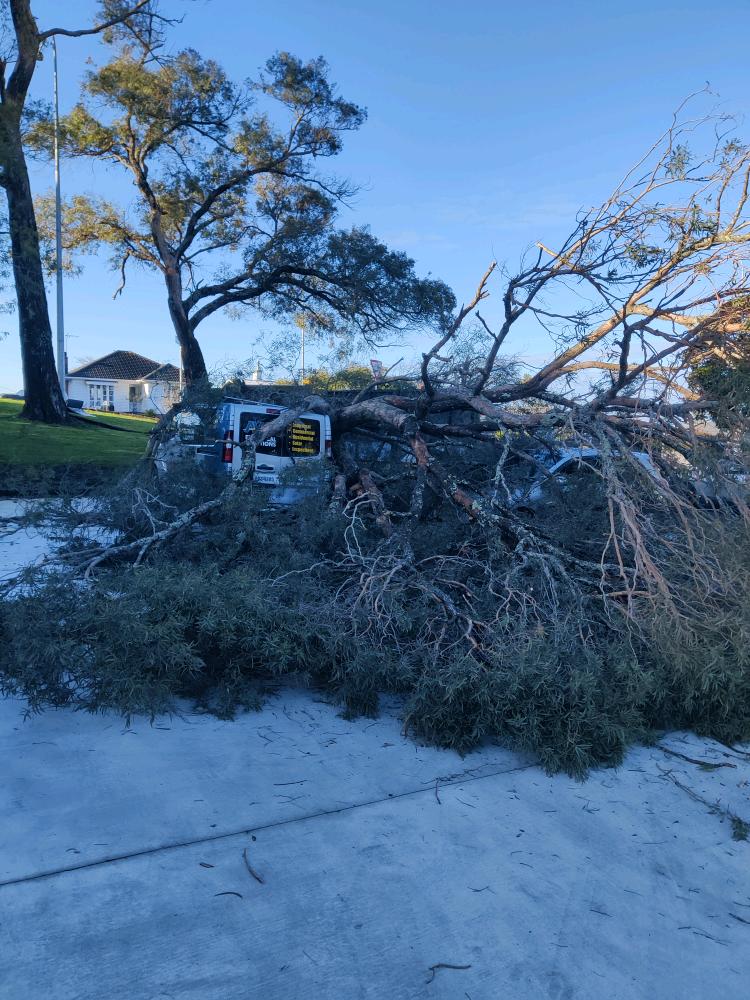
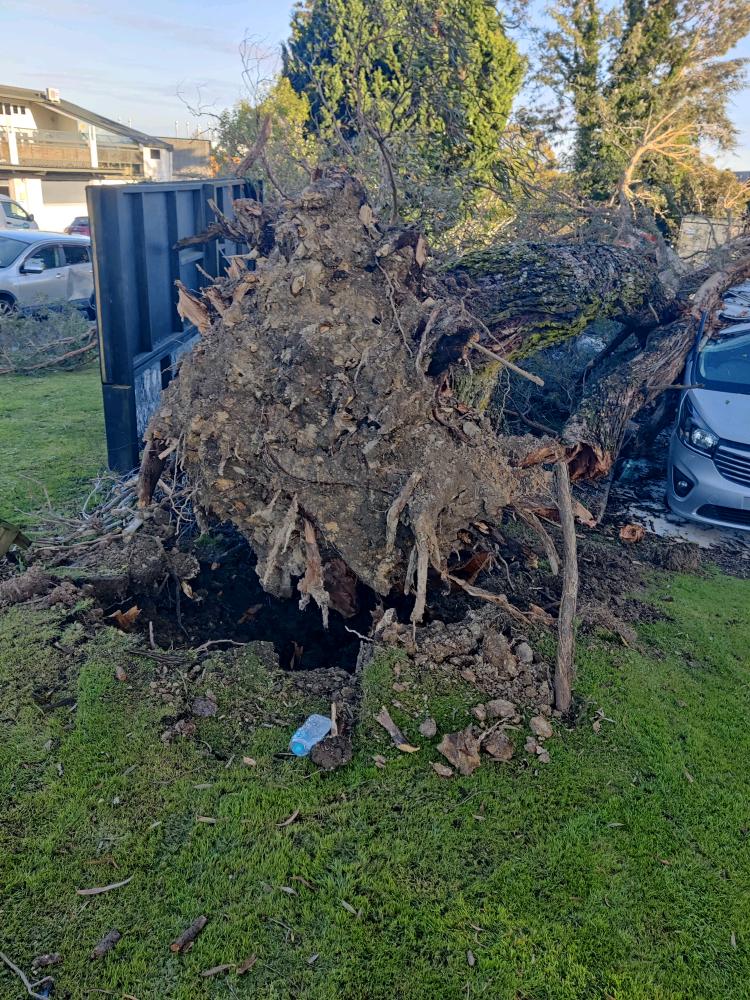
The fallen eucalyptus across the car park and its exposed root plate beside one of the damaged vehicles.
Check the Remaining Tree
When a large branch or stem fails, the remaining tree also needs attention. The failure may have opened a major wound, changed the tree’s weight distribution or exposed a structural weakness that was not visible beforehand.
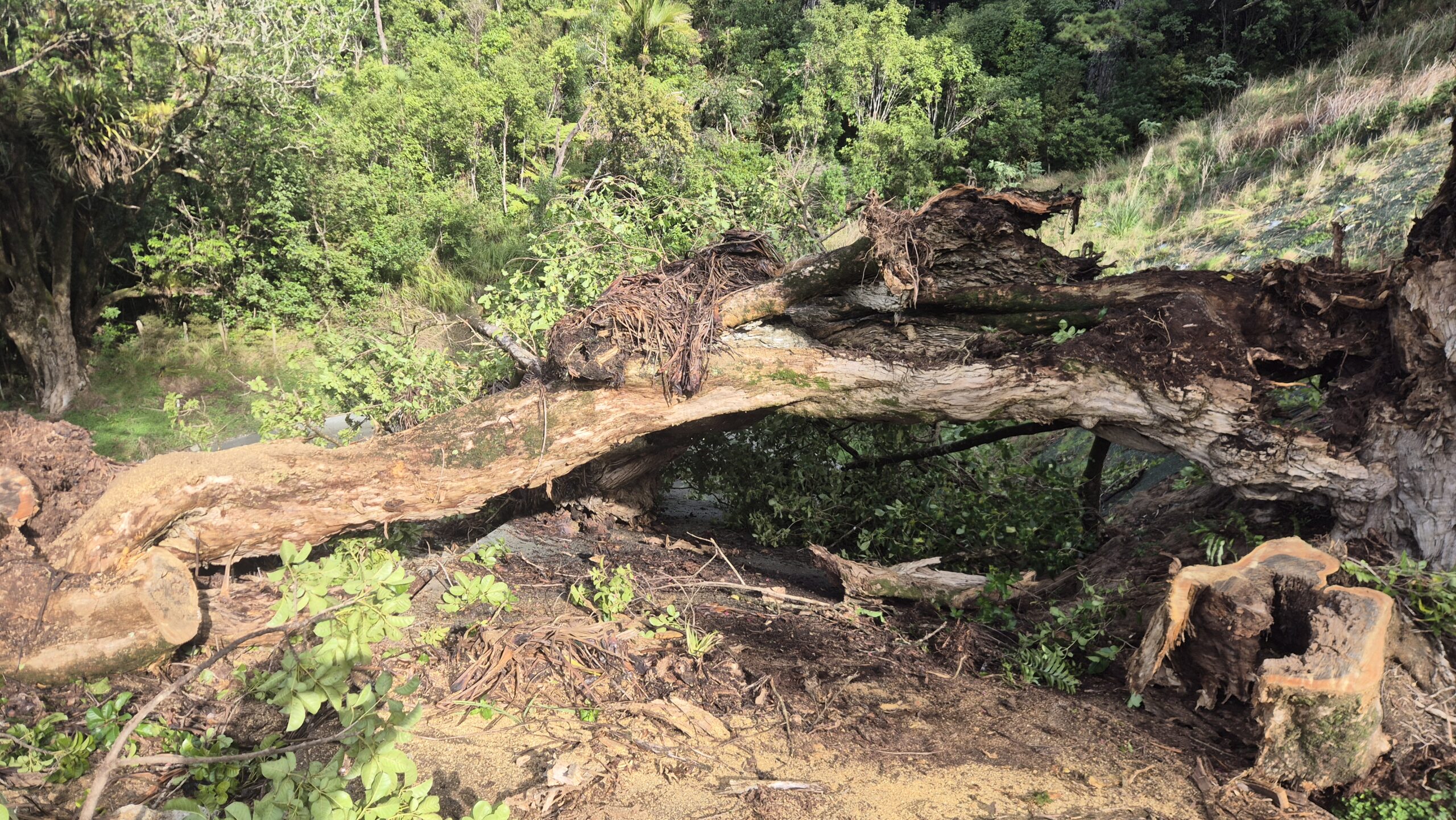
At a Hardfell project near Martins Bay, a major stem from a mature pūriri failed across the only access to a construction site. After the fallen material was cleared, our arborists assessed the remaining tree and found that its structure had been significantly compromised. Hardfell later returned to complete the hazardous tree removal near Warkworth.
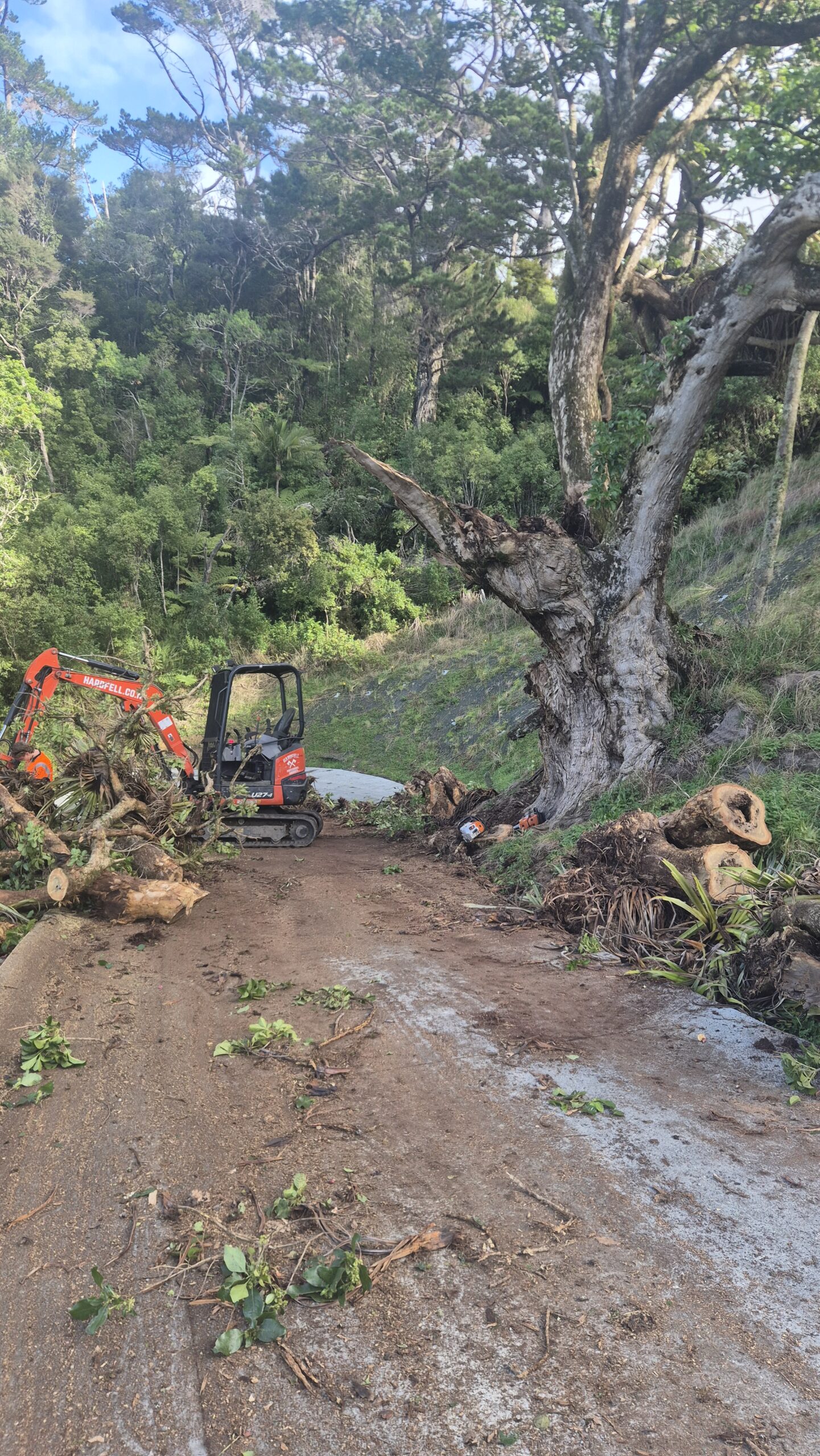
An arborist assessment does not automatically mean removal. Depending on the damage, tree condition and target area, the appropriate response may be pruning, weight reduction, bracing, monitoring, restricting access or removal.
Slopes, Streams and Soft Ground
Trees beside waterways, on steep banks or in areas with poor drainage may be harder to inspect and access after heavy rain. Erosion, slips, waterlogged timber and unstable footing can add hazards even after the weather improves.
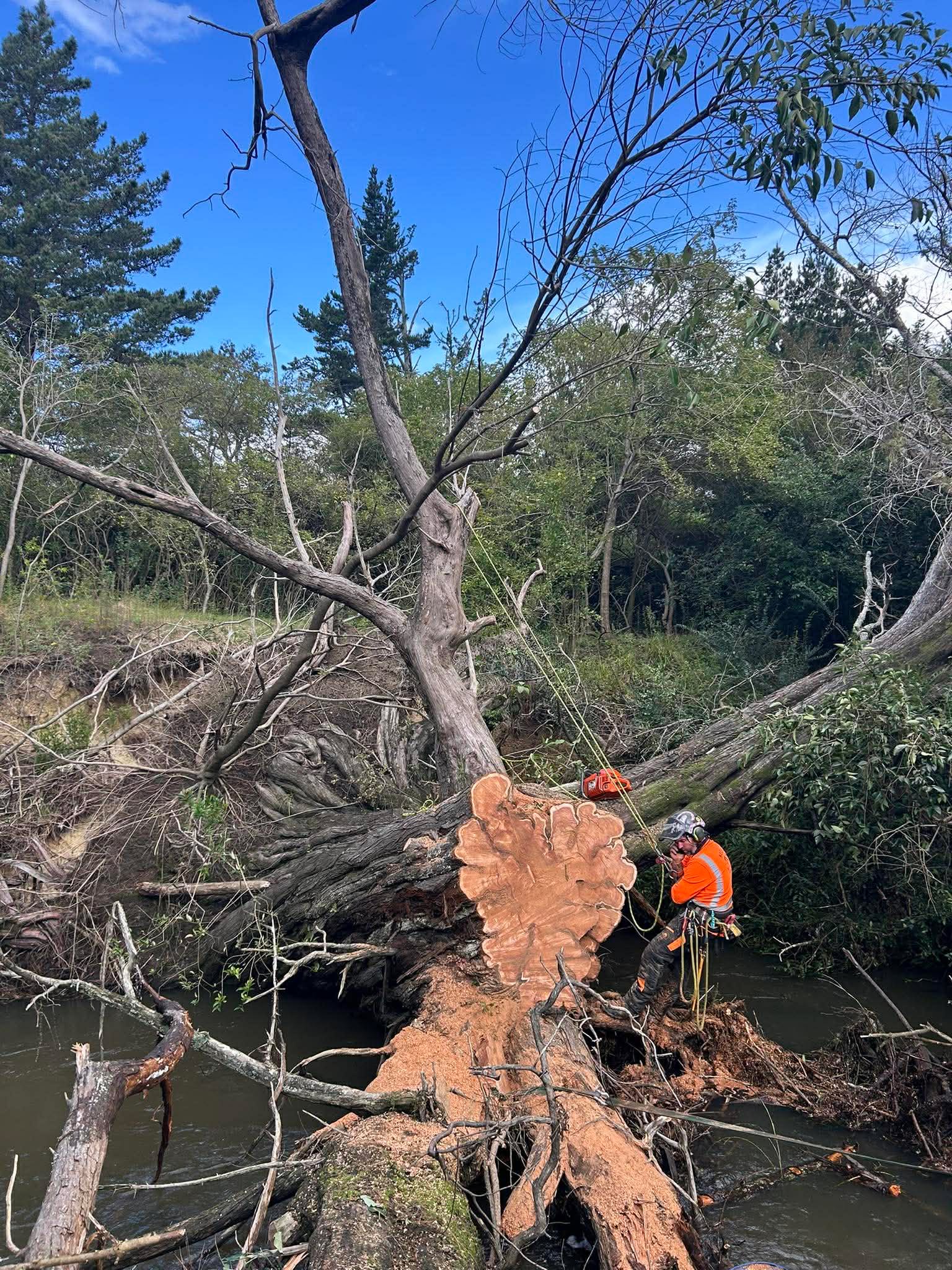
At a separate Kumeū job, a large tree fell into a creek and caused a major blockage. Hardfell spent five days using diggers and winches to remove the trees from the site. The entire root ball was also removed from the creek to help clear the waterway.
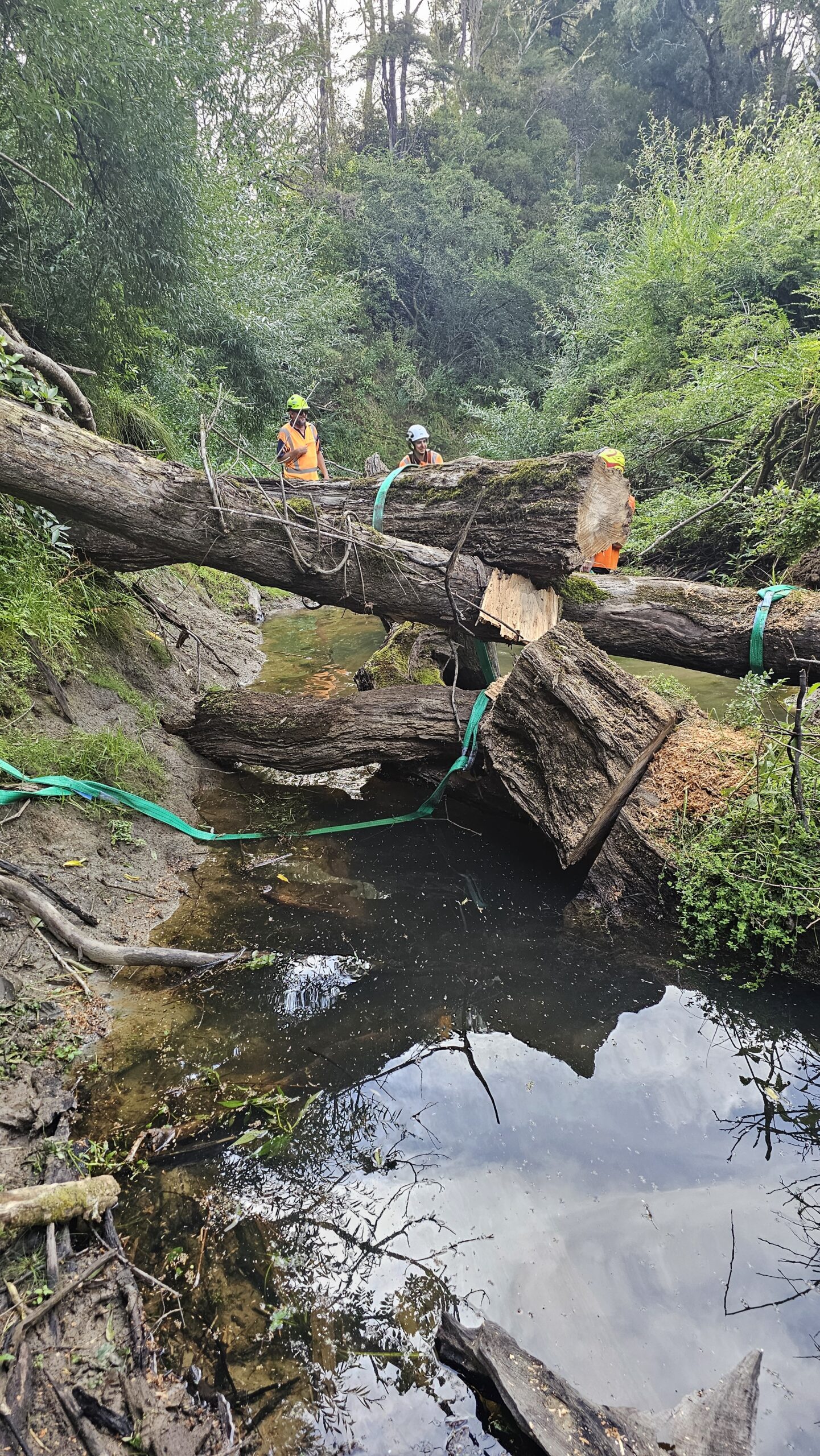
Hardfell’s Coatesville helicopter tree removal case study involved storm-felled trees blocking a steep section of the Rangitopuni Stream. Around 70 helicopter lifts were used because conventional machinery could not safely reach the waterway.
When to Call an Emergency Arborist
Arrange urgent advice if:
- A tree or large limb has moved, split or fallen.
- A tree is blocking a driveway, road or essential access.
- A damaged branch is hanging over people, buildings or vehicles.
- The root plate or surrounding soil has lifted.
- The tree has developed a new lean toward a target area.
- There is damage to a roof, fence, retaining wall or other structure.
If there is an immediate threat to life or a tree is involved with power lines, call 111 and follow the electricity network’s instructions. Keep well clear.

Emergency Tree Services Across Auckland
Hardfell provides 24/7 emergency tree services across Auckland for fallen trees, failed stems, hanging branches, blocked accessways and storm damage.
We are an NZ Arb Registered Master Arborist company, Tōtika Prequalified, SiteWise Gold and insured for $10 million public liability. Our crews have the climbing, rigging and machinery capability to manage residential, commercial and difficult-access tree emergencies.
If you are concerned about a tree after heavy rain, send us your location and clear photos from a safe distance. We can advise whether the situation appears urgent and arrange a site assessment where required.
Frequently Asked Questions
Can heavy rain cause a tree to fall?
Heavy rain can soften and saturate soil, which may reduce root anchorage. It is usually one possible contributing factor rather than a complete explanation. Wind, root damage, decay, soil conditions, tree structure and exposure can also influence failure.
What is the most urgent warning sign after a storm?
A new lean combined with lifted soil or root movement requires urgent attention. Fresh trunk splits, large hanging branches and any contact with power lines are also serious warning signs.
Can a storm-damaged tree be saved?
Sometimes. The right response depends on the extent of the damage, the remaining structure, the tree’s condition and what could be affected if another failure occurs. An arborist may recommend pruning, bracing, monitoring or removal.
Should I remove a hanging branch myself?
No if it requires climbing, a ladder, a chainsaw or work beneath unstable material. Hanging and partially supported branches can move unpredictably. Keep the area clear and contact a trained arborist.
Does Hardfell provide emergency tree removal throughout Auckland?
Yes. Hardfell provides 24/7 assistance for fallen trees, storm damage, hazardous branches and blocked accessways across Auckland, subject to crew availability and priority of risk.
By Shaun Hardman
Director and Arborist, Hardfell Ltd
Last reviewed 2 September 2026
General information only. Tree risk cannot be determined from an article or photograph alone.