
Not sure if you need council consent to remove a tree in Auckland? Learn the rules, the Notable Trees Register, and how a qualified arborist can guide you through the process.
Last reviewed: August 2026
Auckland tree protection rules can depend on the property, planning overlays and the work proposed. Always check the current Auckland Council information before pruning or removing a potentially protected tree.
Quick answer
Many ordinary trees on private residential property in Auckland can be removed without resource consent. However, consent or further checks may be required where a tree is scheduled as notable, protected by a planning overlay or consent condition, located within protected vegetation, or affected by rules applying to its root zone. The property and proposed work need to be checked before cutting starts.
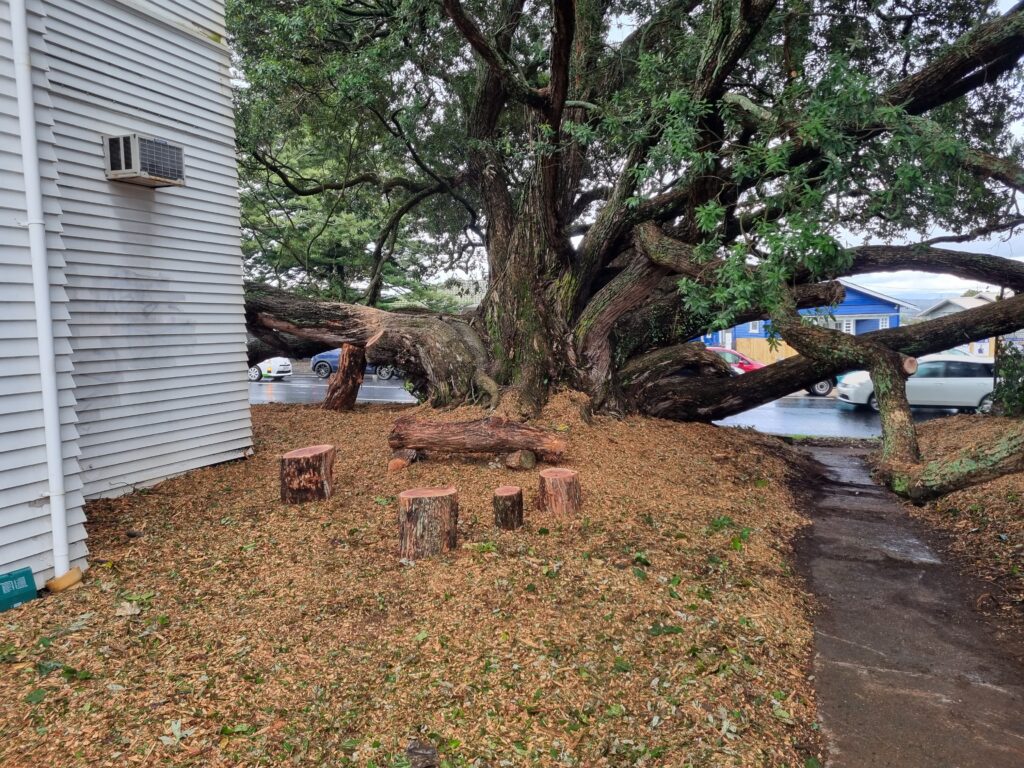
What to check before pruning or removing a tree
- Search the property using Auckland Council’s planning and property maps.
- Check for a Notable Trees Overlay, Significant Ecological Area or other relevant planning controls.
- Review any resource consent, subdivision or development conditions affecting the site.
- Photograph the tree and the surrounding area, including access, nearby structures and utilities.
- If anything is unclear, ask Auckland Council or a qualified arborist before work begins.
If you’re considering tree removal in Auckland, you’ve probably asked yourself: “Do I need council consent?”
The answer depends on the type of tree, its location, and the Auckland Council rules that protect certain trees. In this guide, we’ll break down:
- When you do and don’t need consent
- How notable tree pruning is regulated
- How a qualified arborist can help you through the process
🏛 Auckland Council Tree Removal Rules
Since changes to the Resource Management Act (RMA) in 2012, not every tree is automatically protected in Auckland. However, there are still several situations where consent is required before removal:
- Notable Trees Register
- Trees listed on the Council’s Notable Trees Schedule cannot be removed or significantly pruned without consent.
- These trees are considered to have historical, cultural, or environmental value.
- Protected Zones
- Trees within coastal areas, significant ecological areas (SEAs), or riparian margins (near streams and waterways) may be protected under the Auckland Unitary Plan.
- Resource Consent Conditions
- Some properties have conditions tied to subdivision or development that require certain trees to remain.
- Urban Environment Rules
- If you’re in a new development or special character area, additional restrictions may apply.
Notable-tree pruning limits
Under the Auckland Unitary Plan, pruning a notable tree can be a permitted activity only when all applicable standards are met:
- No branch removed is more than 50mm in diameter at the point of severance.
- No more than 10% of the tree’s live growth is removed in one calendar year.
- The work meets best arboricultural practice.
- The tree’s natural shape, form and branch habit are retained.
All of these limits matter. Read our detailed notable tree pruning guide before planning work on a scheduled tree.
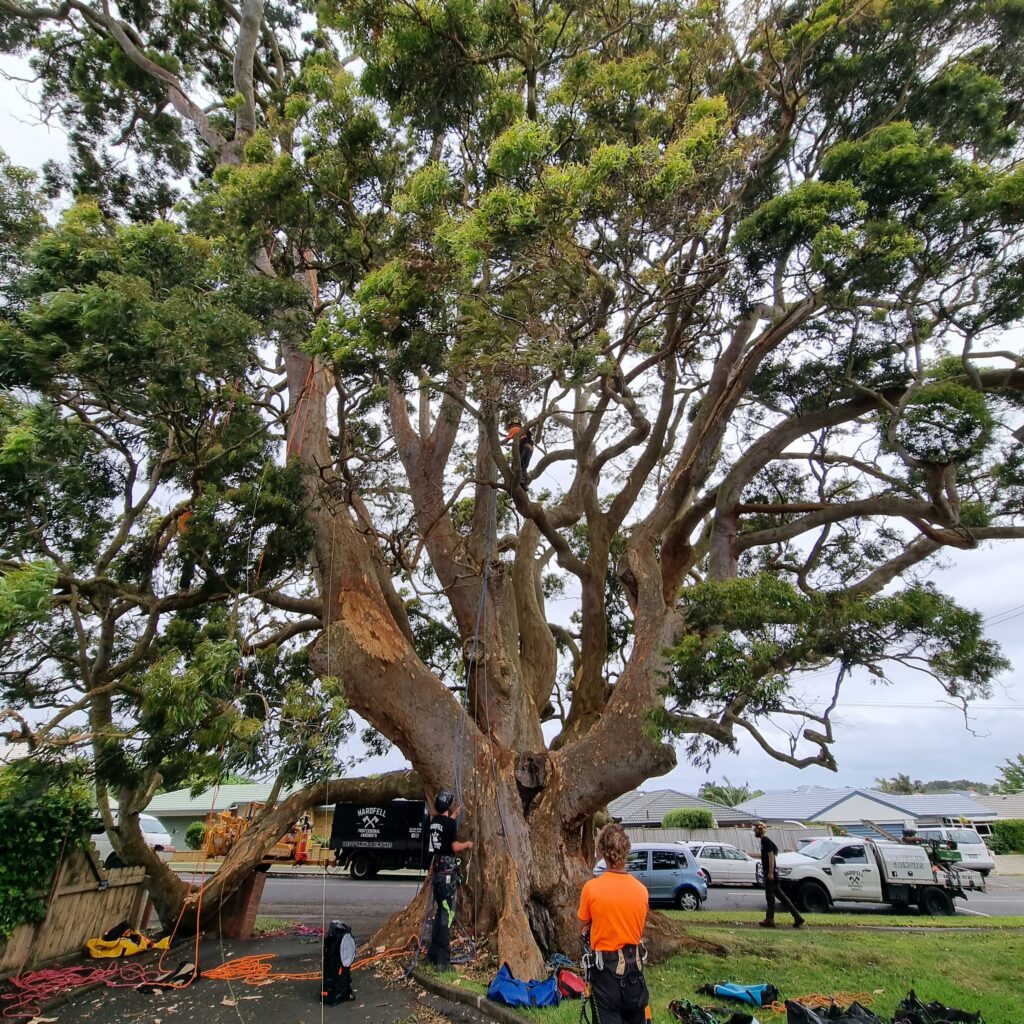
Different tree work can have different consent requirements
- Tree removal: Removing a notable tree is a discretionary activity and requires resource consent.
- Live-branch pruning: Pruning may be permitted when every applicable standard is met. Work outside those limits generally requires consent.
- Deadwood removal: Deadwood removal from a notable tree is permitted when undertaken by a qualified arborist. Different requirements apply when it is not.
- Emergency tree work: Genuine emergency work has separate provisions. Keep people clear and contact a qualified arborist and Auckland Council where possible.
- Root-zone work: Excavation, trenching and construction around a protected tree may require consent even when no branches are cut.
🌳 What Is the Notable Trees Register?
The Notable Trees Register is Auckland Council’s official list of trees considered important due to:
- Age
- Size and species
- Cultural or historical significance
- Environmental benefits
You can search your property address on the Auckland Council Property Search Tool to check if a tree is listed.
Removing or damaging a Notable Tree without consent can result in significant fines.
🛠 What Arborists Can Advise
A qualified arborist (like Hardfell Ltd) can:
- Check the rules for your property — we know how to search the Auckland Council maps and Notable Tree Register.
- Provide reports — if you need to apply for consent, we can prepare an arborist report that strengthens your case.
- Recommend alternatives — sometimes pruning or deadwood removal is allowed without consent, saving time and money.
- Handle removal safely — if consent is granted, we’ll take care of the job from start to finish, including waste disposal.
❓ FAQs About Tree Removal Consent in Auckland
1. How do I know if my tree is protected?
Use the Council’s property maps or ask an arborist to confirm.
2. Can I prune a protected tree without consent?
Minor maintenance like removing dead branches is usually allowed, but structural pruning may need consent. Always check first.
3. What happens if I remove a protected tree without consent?
You risk large fines, legal costs, and being required to replace the tree.
4. How long does consent take?
Timeframes vary depending on the activity, application quality, complexity, notification requirements and whether Auckland Council requests further information. An arborist report can provide the technical information needed to support an application, but it does not guarantee faster processing.
✅ Get Expert Advice from Hardfell Ltd
Unsure if you need consent? Don’t risk fines — let us check for you.
📞 Call Shaun at Hardfell Ltd on 021 072 0739
📧 Email: shaun@hardfell.co.nz
🌐 hardfell.co.nz/
We’ll confirm whether your tree needs council consent, prepare any required reports, and if removal is approved, we’ll complete the job safely and professionally.
🔑 Key Takeaways
- Some trees in Auckland require council consent to remove, especially those on the Notable Trees Register.
- Protected zones (coastal, ecological, riparian) also have restrictions.
- Always check before cutting — fines for unlawful removal are steep.
- An experienced arborist can guide you through the process and handle consent paperwork.