
Notable tree pruning in Auckland is not as simple as booking a crew and cutting back the branches. If you own or manage a property with a protected tree, the type and amount of work you can carry out without resource consent is tightly controlled under the Auckland Unitary Plan.
The good news is that routine maintenance can often be completed without consent when it stays within the permitted standards and is carried out correctly. The key is knowing where the limits are before any cuts are made.
If you already know your tree is notable and need an experienced crew to complete the work, see our notable tree pruning services in Auckland.
What is a notable tree?
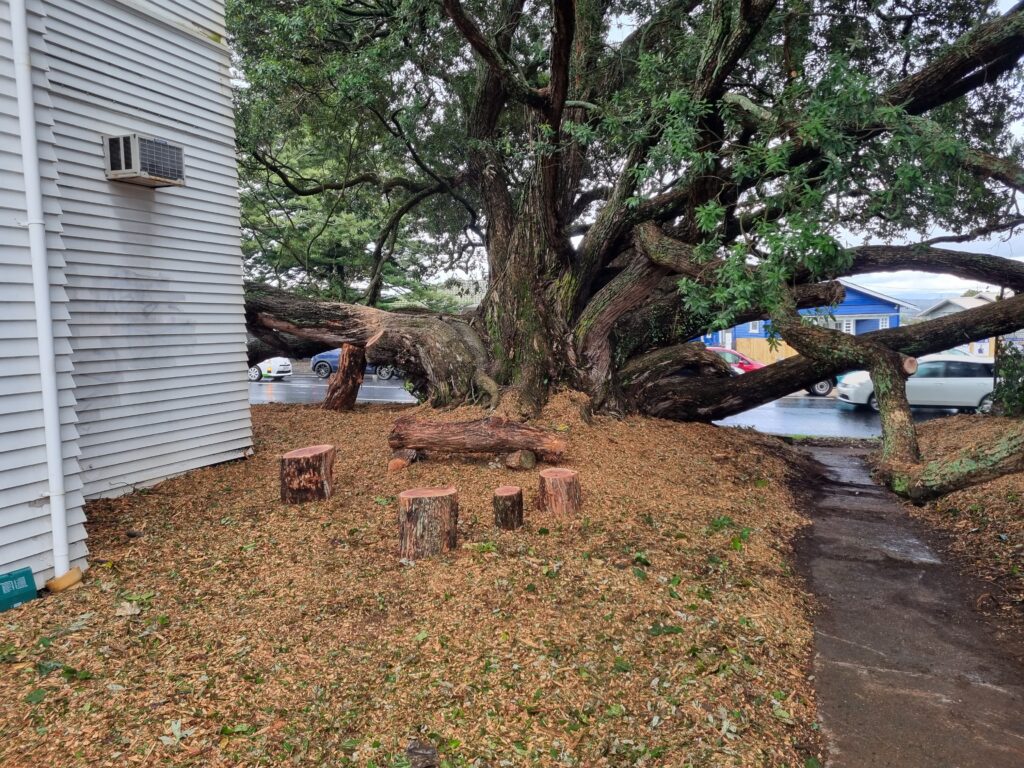
A notable tree is an individual tree or group of trees listed in Schedule 10 of the Auckland Unitary Plan and identified by the Notable Trees Overlay. Trees may be scheduled because of their size, age, species, history, cultural importance, landscape value or other significant characteristics.
The overlay symbol in Auckland Council’s mapping indicates that a scheduled tree or group is present, but it may not show the exact position of each tree. The Schedule 10 entry provides more detail about the species and location. If there is any doubt, check with Auckland Council before work begins.
How do I check if my tree is protected?
Homeowners can do a quick preliminary check by opening Auckland Council’s Unitary Plan map and following the address-search steps below.
1. Enter your property address in the search bar and select the correct result.
2. Zoom in and look for the Notable Trees Overlay marker on or near the property.
3. Click the map symbol and note the schedule or reference number shown.
4. Cross-check that number and the property details in the Schedule 10 Notable Trees Schedule.
5. Before planning any work, review the permitted standards in Rule D13 of the Auckland Unitary Plan or get advice from a qualified arborist.
Do not rely only on the position of the map symbol. On some sites, especially those with groups of trees, the overlay marker does not identify the exact trunk location. A qualified arborist or Auckland Council can help confirm what is protected.
Can you prune a notable tree without resource consent?
Yes, tree trimming or alteration can be a permitted activity under Rule D13 of the Auckland Unitary Plan, but all four of the following standards must be met:
- The maximum diameter of any branch removed must not exceed 50mm at the point where it is cut.
- No more than 10% of the tree’s live growth may be removed in any one calendar year.
- The work must meet best arboricultural practice.
- The pruning must retain the tree’s natural shape, form and branch habit.
All four conditions matter. A proposal that removes less than 10% of the live growth can still require consent if a branch is larger than 50mm at severance. Likewise, cuts below 50mm do not make a heavier canopy reduction permitted if it exceeds the annual 10% limit or changes the tree’s natural form.
What about deadwood?
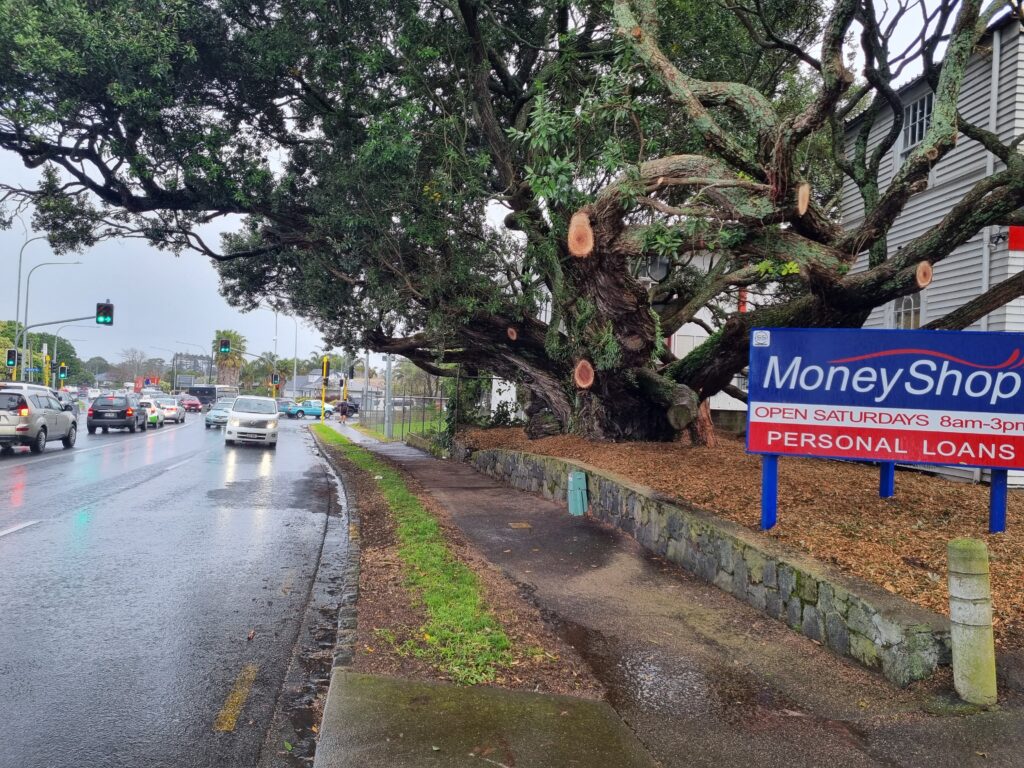
Deadwood removal is permitted when it is undertaken by a qualified arborist. If the person carrying out the deadwood removal is not a qualified arborist, the activity is controlled and resource consent is required.
This distinction is important. Large dead branches can present a real risk, but removing them from a significant tree still requires good judgement, correct cuts and appropriate access and lowering methods.
When is resource consent required?
Resource consent is generally required when proposed pruning or alteration does not comply with the permitted standards. This includes work involving a branch over 50mm at severance, removing more than 10% of live growth in a calendar year, or work that does not retain the tree’s natural shape, form and branch habit.
Non-compliant trimming or alteration is a restricted discretionary activity. Auckland Council will consider matters such as alternatives, effects on the values for which the tree was scheduled, tree health and stability, risk to people or property, the proposed methods, mitigation and consistency with best arboricultural practice.
Tree removal is a discretionary activity. Being inconvenient, dropping leaves or shading a property is not automatically enough to justify removal. A strong application needs clear arboricultural evidence and must address the reasons the tree is protected.
Are the roots protected too?
Yes. Under the Notable Trees Overlay, references to a tree include its protected root zone. Excavation, trenching, driveways, building work, service installation and changes to ground levels can affect protected roots even when no branches are cut.
There is a narrow permitted pathway for certain trenchless work more than one metre below ground, subject to detailed limits on excavation area, root diameter, disturbance, machinery and qualified arborist direction. Other work within the protected root zone is generally restricted discretionary and may require consent. Get advice before digging.
Does notable-tree consent cost money?
Resource consent processing charges may sometimes be waived when the application is for routine maintenance of a notable tree. This can depend on the proposed work and Auckland Council’s current charging approach, so it is best to check with the Council’s heritage tree team before applying.
Even if Council processing charges are waived, you may still need to budget for a qualified arborist’s assessment, a tree works plan or arborist report, and in some cases planning support. The total cost depends on the complexity of the proposal and the supporting information required.
There is no single fixed price that applies to every notable-tree consent. The most efficient starting point is a clear site assessment and pruning specification. That helps establish whether consent is needed and, if it is, what supporting information should be prepared.
How long does the process take?
Timeframes vary. Allow time for the initial inspection, preparation of the arborist report or tree works plan, council processing and any request for further information. More complex proposals, work near roads or power lines, and applications involving several parties can take longer. Do not book the pruning crew around an assumed approval date.
Our work on Old Goff, a significant Auckland Angophora
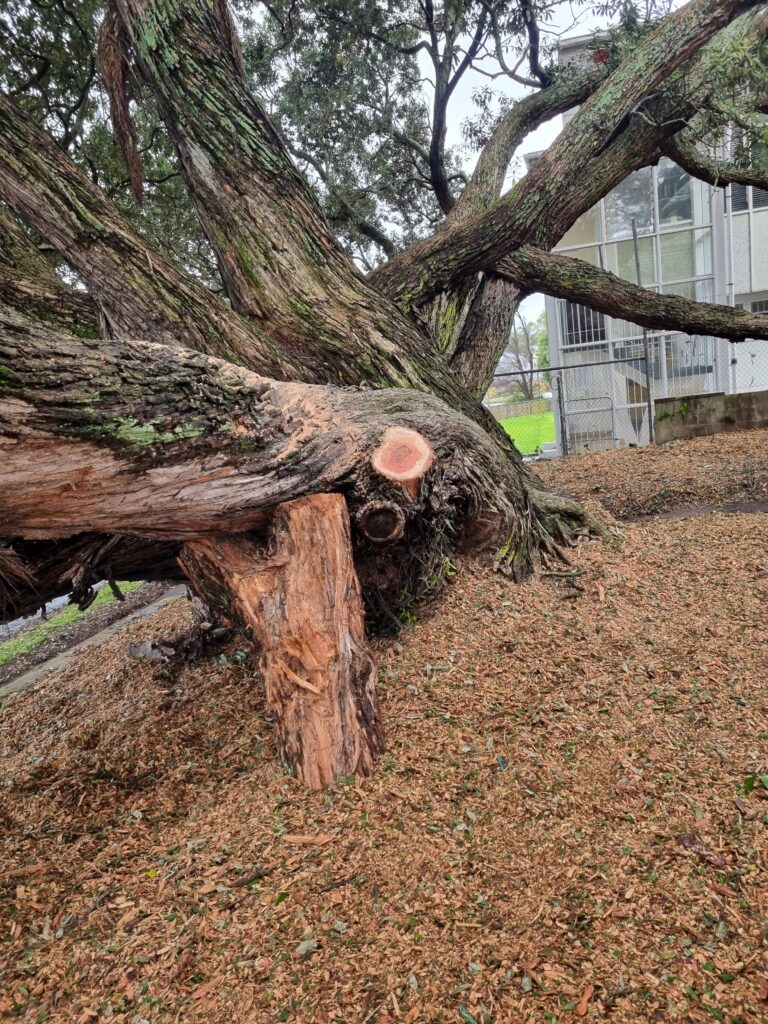
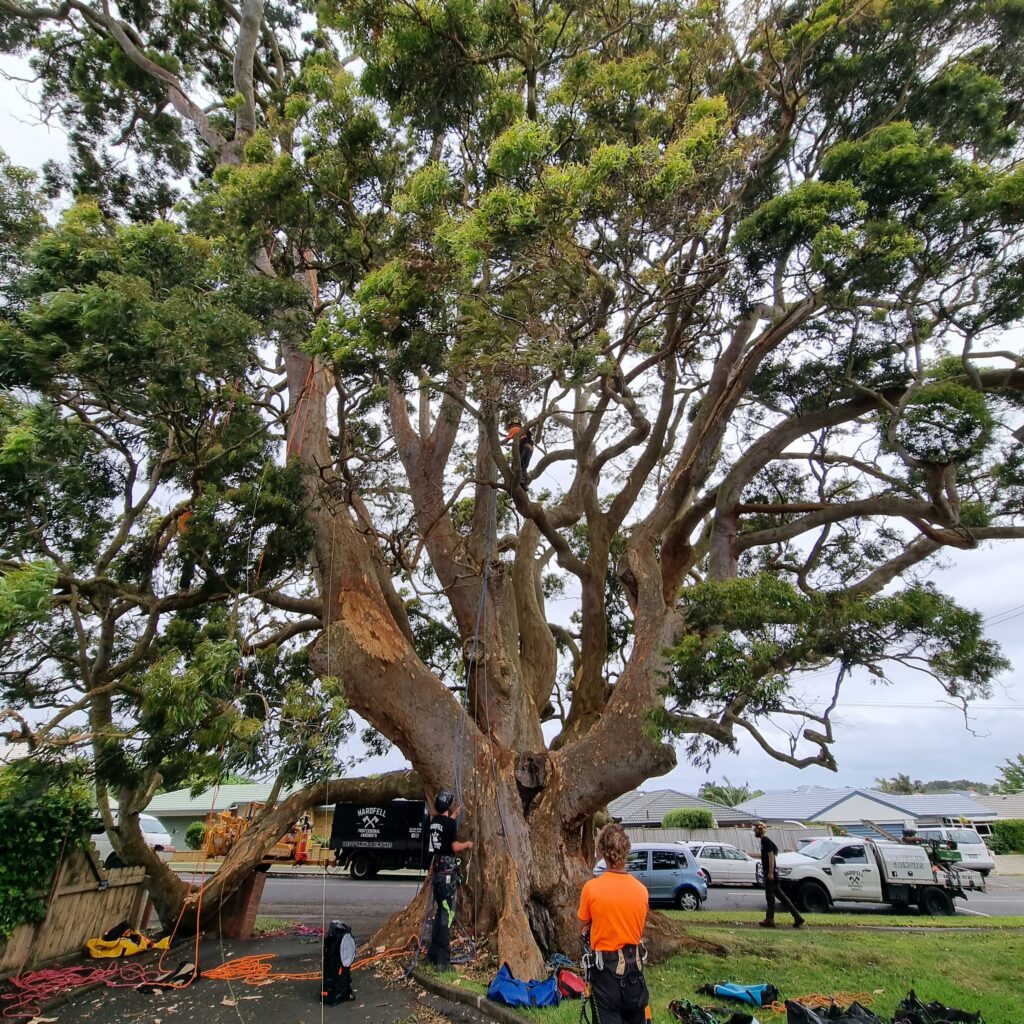
Hardfell has worked on Old Goff, a large Angophora recognised in New Zealand’s 2026 Tree of the Year programme. The tree stands beside the road and near power lines, so the job involved much more than simply sending up a climber with a saw.
We organised traffic management, selected a suitable cherry picker for the roadside pruning, and brought a trained crew with a truck and chipper. The work included deadwooding the large Angophora and pruning it away from the power lines.
Where large dead sections had to be removed, they were lowered in a controlled manner to avoid unnecessary damage to the tree’s cambium and surrounding areas. That combination of careful cutting, rigging, access planning and site control is exactly what significant-tree work demands.
Who should prune a notable tree?
Choose a qualified and experienced arborist who understands protected-tree rules, can assess whether the proposed work is permitted, and can prepare a clear specification before cutting starts.
The arborist should also be able to plan access, traffic management, rigging, machinery and work near utilities where required. For deadwood removal, using a qualified arborist is especially important because it determines whether the activity is permitted under Rule D13.
How Hardfell can help
Hardfell is an NZARB Registered Master Arborist company with the equipment, systems and practical experience needed for complex notable-tree work across Auckland. We can:
- Confirm the proposed scope and identify whether it appears to fit the permitted standards.
- Provide professional tree pruning and deadwood removal.
- Help coordinate arborist reporting and resource consent requirements when needed.
- Plan traffic management, elevated work platforms, rigging and work around power lines.
- Complete the work using appropriate arboricultural methods and site controls.
If you are unsure whether a tree is notable or whether your proposed pruning requires consent, get advice before work begins.
Frequently asked questions
Can I remove a few branches from a notable tree myself?
Only if the work complies with every applicable permitted standard. Because branch size, total live-growth removal and natural form all matter, it is safer to have a qualified arborist assess the proposal first. Deadwood removal by someone who is not a qualified arborist requires resource consent as a controlled activity.
Does the 10% rule include deadwood?
The standard specifically limits the removal of live growth. Deadwood removal is treated separately in the activity table. However, it must be undertaken by a qualified arborist to be permitted.
Can I cut a branch larger than 50mm if I remove less than 10%?
Not as permitted trimming under Standard D13.6.1. The maximum branch diameter must not exceed 50mm at the point of severance. Work outside that limit is restricted discretionary and requires resource consent.
Can a notable tree be removed if it is unsafe?
Emergency tree works are provided for as a permitted activity, but the situation and scope must genuinely meet the relevant emergency provisions. Planned removal of a notable tree is discretionary and requires resource consent. If there is an immediate risk, keep people clear and contact a qualified arborist and Auckland Council.
Related services and advice
Written by Shaun Hardman, Director and Qualified Arborist at Hardfell Ltd.
This article is general information based on the Auckland Unitary Plan Notable Trees Overlay. Site-specific rules and circumstances can differ, and plan provisions may change. Confirm the current requirements for your property before starting work.